Bariatric Hospital Beds Guide | Heavy-Duty Home Beds | Orlando


Finding the right hospital bed for a larger patient requires careful attention to weight capacity, frame construction, mattress sizing, and accessibility features. We regularly see families struggle to find adequate options since standard hospital beds cap out around 350 to 450 pounds. This gap in the market leaves many caregivers searching for a resource like Bariatric Hospital Beds: A Complete Guide to Heavy-Duty Home Beds to find clear, verifiable facts.
We will break down the engineering specifically designed for heavier patients, offering the same comfort and functionality as standard beds while providing the necessary structural support. Orlando families seeking bariatric solutions will find that local availability matters — our Central Florida location means shorter wait times and hands-on installation support, unlike ordering nationally shipped equipment.
Let us look at the data, what it actually means for daily care, and explore the best ways to set up a safe home environment.
Understanding Bariatric Bed Weight Capacities
Our extra-wide bariatric hospital beds support up to 500 pounds with a generous 48-inch sleep surface. The reinforced steel construction, heavy-duty casters, and upgraded motor systems are designed for reliable daily use at full capacity while maintaining the same smooth, quiet positioning performance as our standard-width models.
Choosing the Right Capacity
Always select a bed rated to comfortably support the patient’s total weight. The rated capacity must include the patient, the mattress, all bedding, and any additional accessories. A 400-pound patient with a 60-pound bariatric mattress and 20 pounds of bedding uses 480 pounds of capacity — which fits well within a 500-pound rated bed. Contact our team to discuss your specific weight capacity needs and we can recommend the right setup for your situation.
Reinforced Steel Frame Construction
Frame Design
A reinforced steel frame bariatric bed uses thicker-gauge steel tubing, typically 14-gauge or heavier, to prevent bending under stress. We know that additional cross-bracing and reinforced weld points at every joint are non-negotiable for safety. The bed deck itself frequently uses stamped pan steel rather than the lighter spring deck found in standard models. Some top-tier manufacturers even use dual-rail frame construction where standard beds use single rails.
Motor and Actuator Systems
Standard hospital bed motors produce enough force to lift a 350-pound load safely. Our preferred bariatric models utilize higher-torque motors, often relying on dual-motor systems where standard beds use just one. This upgraded power handles the increased weight while maintaining smooth, controlled movement. The linear actuators in premium bariatric beds, such as those made by the Danish brand Linak, are rated for significantly more cycles at full load. We appreciate this engineering because it ensures long-term reliability and prevents sudden mechanical drops.
Casters and Base
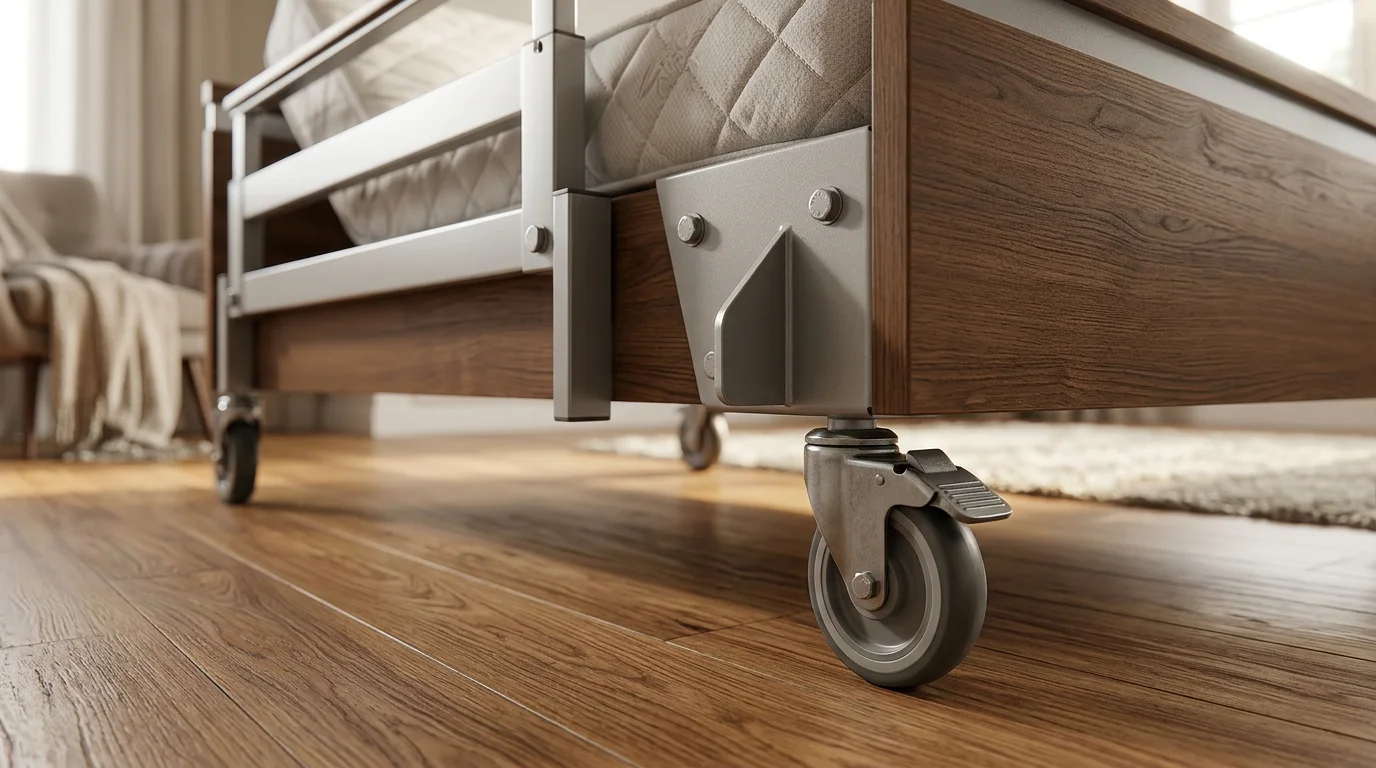
The casters on a bariatric bed are larger in diameter, typically 5 inches wide, and individually rated for higher structural loads. We always check the base width, which is wider than a standard bed to provide a highly stable center of gravity. Locking mechanisms are built with heavy-duty materials to prevent any movement during critical patient transfers.
Bariatric Mattress Selection
The mattress matters just as much as the frame itself. We remind clients that a standard mattress on a bariatric bed will compress excessively, provide inadequate pressure distribution, and wear out quickly. Finding the right surface prevents serious medical complications.
Bariatric Foam Mattress
A bariatric foam mattress uses higher-density foam that provides proper support without excessive compression. We highly recommend looking for CertiPUR-US certified foams with a density rating of 1.8 to 2.0 pounds per cubic foot, compared to the 1.2 to 1.4 density used for standard beds. Multi-layered designs combine a firm base layer with softer comfort layers on top. Width options match our 48-inch extra-wide bed deck for a perfect fit.
Bariatric Alternating Pressure Mattress
For patients at a high risk of pressure injuries, a bariatric alternating-pressure mattress provides superior pressure redistribution. Our teams rely on these systems because the air cells are significantly larger and the pump is far more powerful than standard units. These specialized mattresses are absolutely essential for patients who spend most of the day in bed.
Bariatric Low Air Loss Mattress
The premium mattress option combines alternating pressure with low air loss technology. We have found this combination keeps the skin cool and dry while continuously redistributing the patient’s body weight. Bariatric low air loss mattresses typically weigh between 40 and 60 pounds, requiring a highly compatible, high-output pump unit to function correctly.
Mattress Sizing
Bariatric mattresses must match the bed deck width exactly to prevent accidents. We closely follow the FDA guidelines regarding hospital bed entrapment, which mandate that gaps within the bed rails must measure less than 4.75 inches. A larger gap between the mattress edge and the side rail creates a severe entrapment hazard. This specific measurement is critical for bariatric patients who may have difficulty self-rescuing from an awkward position. Our recommendation is to strictly measure the mattress against the frame before use.
Patient Lift Compatibility
Many bariatric patients benefit immensely from a mechanical lift for bed-to-chair and bed-to-standing transfers. We consider bariatric patient lift compatibility a mandatory consideration when selecting a home hospital bed.
Floor-Based Lifts
A heavy-duty Hoyer-style lift requires specific clearance under the bed frame for its base legs. We advise measuring the under-bed clearance of any bed you consider, aiming for at least 5.5 to 6 inches to accommodate modern bariatric lifts. Compare this measurement directly to the base leg dimensions of your specific lifting device. Most bariatric beds are designed with this standard US clearance in mind, but verifying the exact numbers prevents costly setup errors.
Overhead Track Lifts
Ceiling-mounted track lift systems eliminate the base-clearance issue entirely. Our experience shows that these track systems often provide the most comfortable and least intimidating transfer experience for the patient. If you are planning a dedicated bariatric care room, an overhead lift combined with a compatible heavy-duty bed creates an optimal, highly efficient transfer system.
Sit-to-Stand Lifts
For patients who can partially bear their own weight, a bariatric sit-to-stand lift allows them to transfer with minimal caregiver assistance. We ensure the bed is fully adjustable to the correct height to work seamlessly with these devices. This functional requirement is another major reason the full-electric Hi-Lo feature is so critically important for home care.
Room Planning for Bariatric Beds
A bariatric bed takes up significantly more room than a standard hospital bed. We created the following baseline requirements to help you plan your space effectively:
| Bed Width | Minimum Room Width | Recommended Room Width |
|---|---|---|
| 42 inches | 10 feet | 12 feet |
| 48 inches | 11 feet | 13 feet |
| 54 inches | 12 feet | 14 feet |
These recommendations assume 36 inches of clearance on both sides of the bed for caregiver access and lift operation. We strongly recommend two-sided access for bariatric care, though you can work with a narrower room if clearance is only possible on one side.
Additional space planning considerations:
- Turning Radius: The 2025 ADA guidelines require a 60-inch minimum wheelchair turning radius, but new recommendations suggest up to 67 inches for larger power-assisted mobility devices.
- Doorway width: A 48-inch bed deck requires doorways at least 36 inches wide, as the bed enters on its side. Wider beds often dictate structural door modifications or delivery through a sliding glass door.
- Floor strength: The combined weight of bed, patient, mattress, and accessories can add up significantly. Wood-frame floors in upper stories may need a professional structural assessment to confirm adequate support.
- Electrical requirements: Bariatric beds with higher-torque dual motors draw more electrical current. A dedicated circuit prevents tripped breakers during operation.

Safety Features Specific to Bariatric Beds
Patient safety requires specialized equipment beyond just a stronger frame. We pay close attention to the features that directly prevent falls and injuries.
Side Rails
Bariatric side rails are significantly wider and taller than standard rails to accommodate the thicker mattress and provide adequate containment. We note that the FDA identifies four primary entrapment zones that account for 80 percent of reported bed injuries. Some bed models use full-length assist bars rather than traditional rails to meet these safety standards. This design gives the patient continuous, safe grip support along the entire bed length.
Scale Integration
Some bariatric beds include built-in digital scales that weigh the patient without requiring a transfer to a separate piece of equipment. Our teams find this feature incredibly valuable for patients who require strict fluid or weight monitoring. It removes the physical risk for patients who find transferring to a standing scale difficult or completely unsafe.
Expandable Deck
Several advanced bariatric bed models feature expandable decks that adjust smoothly from a standard width out to a full bariatric width. We recommend these flexible beds if the patient’s needs might change over time or if the equipment will serve different patients. This versatility saves money compared to buying multiple different frames.
Caring for a Bariatric Patient at Home
Beyond the physical bed setup, bariatric home care involves several critical daily health routines. We emphasize that proper technique prevents injuries for everyone involved.
Pressure Injury Prevention
Bariatric patients face an elevated pressure sore risk due to increased weight at pressure points, reduced mobility, and skin conditions associated with obesity. We train caregivers to use the “Rule of 30 degrees” when positioning patients to minimize severe skin shear forces. A strict, regular repositioning schedule is even more critical than with standard-weight patients. See our pressure sore prevention guide for detailed clinical protocols.
Caregiver Safety
Repositioning and transferring bariatric patients creates significant, measurable physical demands on caregivers. We stress that using proper body mechanics, mechanical lifts, and specialized slide sheets is not optional. Caregiver back injuries are incredibly common but entirely preventable with the right equipment and lifting techniques. Our caregiver guide covers these daily transfer safety protocols in detail.
Skin Care
Moisture management deep in skin folds remains a high daily priority. We advise using highly absorbent fabrics, zinc-based barrier creams, and regular visual inspection of areas where skin contacts skin. These proactive steps help prevent painful irritation and severe bacterial infection.
Pricing and Availability
Bariatric hospital beds naturally cost more than standard models due to their heavily reinforced construction and specialized electronic components. We track these market prices closely to help families budget for their 2026 home care needs.
| Bed Type | Typical US Price Range |
|---|---|
| Extra Wide (48") - 500 lb capacity | $7,999 to $9,999 |
High-density mattresses, wide side rails, and specialty accessories will add to your final total. Hospital bed packages that bundle everything together typically offer much better financial value than purchasing components separately.
Because heavy-duty beds are specialized medical equipment, not every local retailer carries them in stock. At Orlando Home Hospital Beds, we carry extra-wide bariatric hospital beds supporting up to 500 lbs and arrange rapid delivery throughout the greater Orlando area. Our dedicated team handles white-glove delivery and full setup. This service ensures the bed is properly assembled and positioned perfectly for your specific room and daily caregiving situation.
Final Thoughts on Bariatric Hospital Beds: A Complete Guide to Heavy-Duty Home Beds
Choosing a bariatric hospital bed serves as a major investment in safety, daily dignity, and overall quality of life. We believe the right bed actively supports the patient's comfort, enables highly effective caregiving, and provides the necessary structural reliability that larger patients require. Our Central Florida team delivers and installs bariatric beds across Winter Park, Kissimmee, Lake Nona, and throughout the I-4 corridor — providing the hands-on, local support that online-only retailers cannot offer.
Start by documenting your loved one’s exact weight and mobility needs. Select a bed with adequate weight capacity for your needs, and then carefully match the mattress and accessories to their specific medical conditions.
Contact us to schedule a visit and see these heavy-duty beds in person, or read our complete buying guide for a comprehensive overview of all hospital bed types.
Our specialists hold deep experience in bariatric care planning and can help you configure the perfect system for your family. By using this Bariatric Hospital Beds: A Complete Guide to Heavy-Duty Home Beds, you are taking the first strong step toward a much safer home environment.